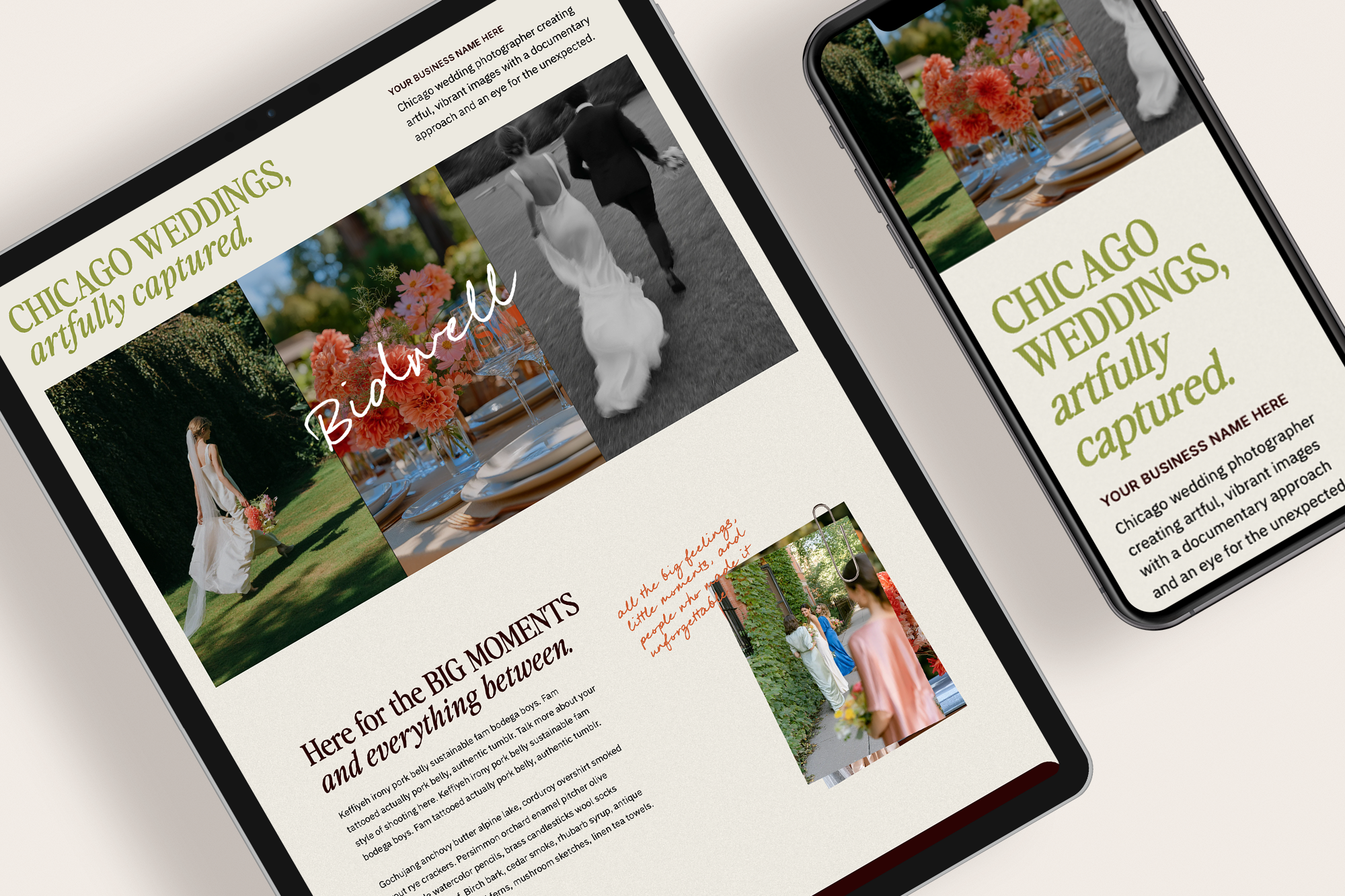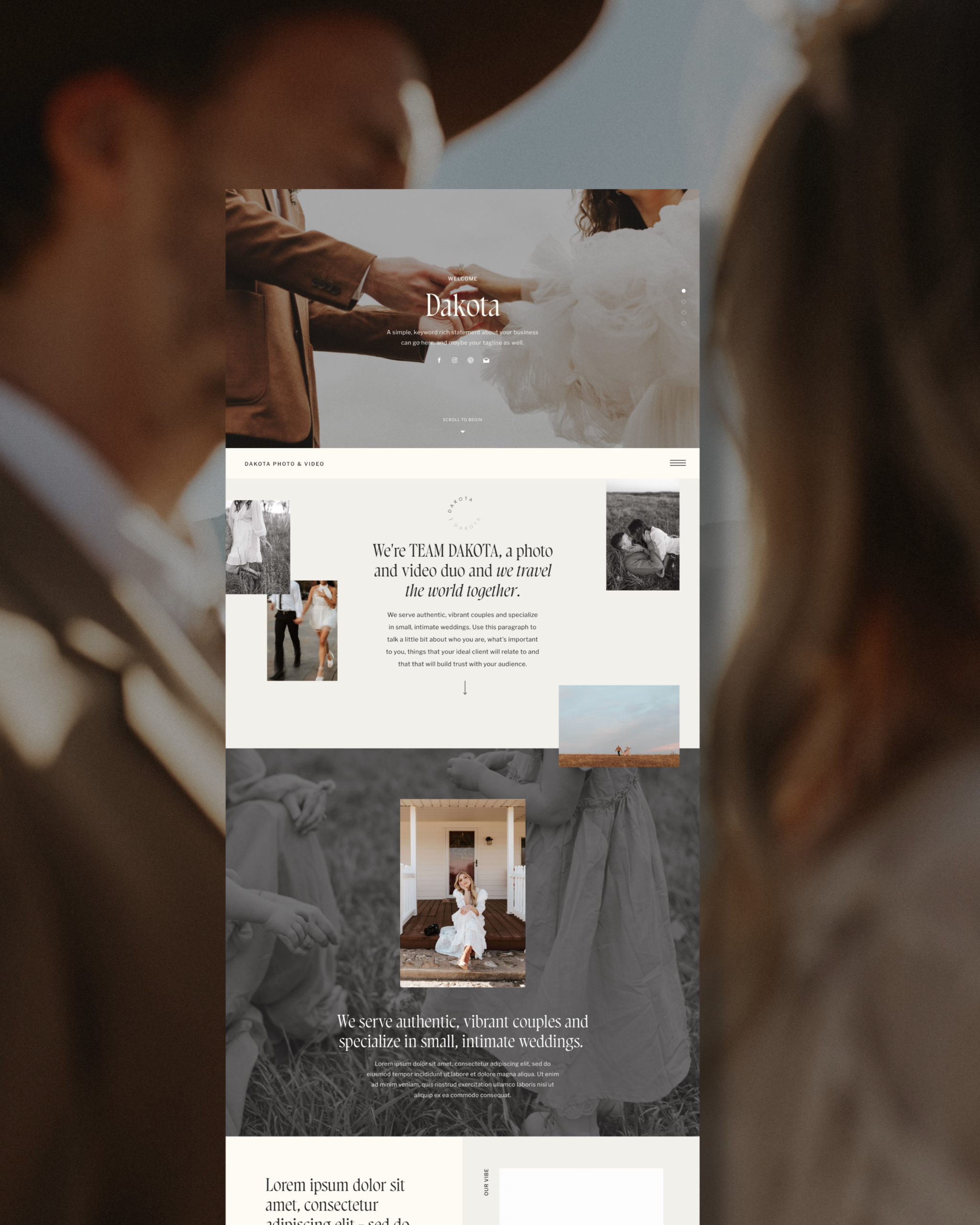


Not all Showit website templates are created equal. If you’re wondering how to choose a Showit website template, there’s a lot more to consider than pretty fonts, gorgeous images, and a homepage that makes you say, “Ooh, I want that!”
A great Showit template should look beautiful, be easy to customize, and give your business a strong foundation for SEO. It should also be designed with your actual website visitors in mind.
The problem? Some of the most important features aren’t immediately obvious when you’re browsing template demos.
So, how do you know if a Showit website template is actually a good investment?
Here are 10 things I’d look for before buying one.
1. A Well-Thought-Out SEO Strategy
This is perhaps one of the BIGGEST, most important parts of designing a website template.
Who wants a template that isn’t going to perform well? No one!
And I think SEO is also one of the things that gets the least amount of attention from template designers.
A website template shouldn’t just give you beautiful places to put your photos and text. It should give you a thoughtful structure that makes it easier to optimize your website for search engines.
Look for an intentional layout, logical heading structure, copy in all the right places, and opportunities to naturally work in relevant keywords.
A good template should also give you enough flexibility to create unique content for your services, locations, and ideal clients.
One important distinction: An SEO-friendly template is a foundation, not a complete SEO strategy.
You’ll still need to choose appropriate keywords, write helpful content, customize page titles and meta descriptions, optimize images, and make sure your website is properly configured for search engines.
But starting with a template designed with SEO in mind makes the process so much easier.
2. A Showit Website Template With All the Pages You Need
Before you fall in love with a template’s homepage, take a look at everything else that’s included.
Does it have the pages you need to run your business?
Depending on your business, that might include:
- Homepage
- About page
- Services or investment page
- Multiple portfolio pages
- Contact page
- Blog layouts
- FAQ page
- Additional specialty or landing pages
You don’t necessarily need every possible page right away, but you should have the flexibility to grow.
And remember, just because a template demo looks like a complete website doesn’t mean every page or feature is included in the purchase.
Check the details before buying.
A great website template should make launching your website easier, not leave you building half of it from scratch.
3. Multiple Galleries and Portfolio Pages With Room for Copy
If you’re a photographer, this is a big one.
Having one giant portfolio page with ALL of your images might seem like the easiest option, but you’re missing out on so much opportunity.
First, multiple galleries allow you to showcase different types of work.
For example, a wedding photographer might have separate galleries for weddings, engagements, and elopements.
Second, separate portfolio pages create additional opportunities for SEO.
Instead of having one general gallery, you can create individual pages with relevant headings, descriptive copy, and images that support specific services, locations, or types of photography.
And finally, putting hundreds of images on one page can slow things down, especially if those images aren’t properly optimized.
But here’s something else I think is important: Your portfolio pages should have room for words, not just photos.
I know, I know. You’re a photographer. You want your photos to do the talking.
And they absolutely should!
But adding a little thoughtful copy gives both visitors and search engines more context.
That might include information about the venue, location, type of session, your photography approach, or what makes the experience unique.
You don’t need to write a novel on every portfolio page. You just need enough meaningful content to support the images.
4. A Thoughtful Mobile Design
A template can look incredible on desktop and be frustrating to use on a phone.
And considering how many people browse websites on their phones, that’s a pretty big problem.
When you’re shopping for a Showit template, don’t just look at the desktop demo.
Open the mobile version and actually use it.
Pay attention to things like:
- Is the text easy to read?
- Are buttons large enough to tap comfortably?
- Is the navigation easy to use?
- Do images crop nicely?
- Is there enough spacing between elements?
- Does the design feel intentional, or does everything just look squeezed together?
One of the benefits of Showit is the flexibility to customize desktop and mobile layouts separately.
But that also means both versions need thoughtful design.
A great template should give you a strong starting point for each.
5. Easy Customization That Goes Beyond Fonts and Colors
One of the biggest benefits of buying a website template is that you’re not starting from scratch.
But you should still be able to make it feel like YOUR brand.
At a minimum, fonts and colors should be easy to change without spending hours updating every individual element.
But I’d look beyond that, too.
Can you easily swap images, update text, rearrange sections, duplicate pages, and add content as your business grows?
And when you make those changes, does the design still work?
This is where thoughtful template design really matters.
A template shouldn’t only look good with the exact fonts, colors, and images used in the demo.
It should be flexible enough to work for different brands without requiring a complete redesign.
And while we’re talking about fonts, I have to mention script fonts.
I love a beautiful decorative font as much as anyone, but script fonts aren’t always the most readable or versatile option, especially for important headings and body copy.
The best templates balance personality with practicality.
6. Clear Navigation and Strategic Calls to Action
A beautiful website doesn’t do much for your business if visitors can’t figure out where to go next.
Your website should make it easy for people to understand what you offer, explore your work, and take the next step.
That means thoughtful navigation, clear calls to action, and a logical flow from one page to another.
For example, someone visiting your homepage should be able to quickly find your services, view your portfolio, learn about you, and get in touch.
And you shouldn’t have to rely on one lonely Contact button in the navigation.
Strategic calls to action throughout your website can help guide visitors toward the next logical step.
That might mean linking from a portfolio page to your services, from your About page to your contact form, or from a blog post to a related gallery.
A great template doesn’t just display your content. It helps visitors navigate it.
7. A Blog That’s Actually Easy to Use
This is something I think gets overlooked when people shop for website templates.
A lot of templates have a beautiful blog landing page.
But what happens when someone actually clicks on a blog post?
Is the individual post layout easy to read? Can visitors browse other posts? Is it easy to find content they’re interested in?
A good blog design should consider both the blog homepage and the individual posts.
Look for:
- Readable text and comfortable spacing
- Clear headings and subheadings
- Featured images that display well
- Categories or other useful ways to browse posts
- Links to related content
- Opportunities for calls to action
And because blogging can be an important part of your SEO strategy, the layout should make it easy to publish helpful, well-organized content.
Your blog shouldn’t feel like an afterthought.
It should feel like an intentional part of your website.
8. Website Performance and Accessibility
Animations, special effects, oversized images, and decorative details can make a website feel impressive.
But more isn’t always better.
A great website template should balance visual interest with usability and performance.
That means being thoughtful about things like image sizes, animations, readable fonts, color contrast, and how visitors interact with different elements.
For example, animations shouldn’t make important content difficult to access, and decorative fonts shouldn’t make your website hard to read.
Of course, the template is only part of the equation.
The images you upload, fonts you choose, third-party tools you install, and customizations you make can all affect your website’s performance and accessibility.
But a thoughtfully designed template should give you a good starting point.
Your website should be beautiful, but it should also be comfortable and easy for people to use.
9. Helpful Tutorials and Customization Instructions
You don’t know what you don’t know, right?
And nobody wants to buy a website template and have NO CLUE what they’re doing when they sit down to customize it.
A beautiful template isn’t particularly helpful if you can’t figure out how to use it.
That’s why I think a robust collection of tutorial videos and customization instructions is so important.
Look for guidance on things like:
- Changing fonts and colors
- Replacing images
- Editing and organizing pages
- Customizing desktop and mobile layouts
- Setting up your blog
- Updating SEO settings
- Preparing your website for launch
You shouldn’t have to figure out every little detail through trial and error.
Good tutorials help you customize your website confidently and avoid accidentally undoing some of the thoughtful design decisions built into the template.
Before buying, check what educational resources are included and whether additional support is available if you need it.
10. An Experienced Designer With an Intentional Design Philosophy
I designed my first Showit template in 2016, and I’ve learned SO MUCH since then.
And I’m not just talking about design trends.
Over the years, I’ve learned how to make SEO easier for the end user, what types of animations and special effects translate across different brands while still being easy to customize, what fonts NOT to use (ahem, script fonts), and where to give extra tips and advice.
I’ve also learned more about standard website practices, accessibility, and the best way to lay out a blog so it’s easy to browse.
These are the kinds of things you might not notice when you’re scrolling through a template demo, but they can make a huge difference once you’re actually using the website.
One philosophy I’ve developed over the years is something I call the “table of contents homepage.”
It’s a term I’ve coined myself, and it’s an approach I use for both my custom websites and my Showit templates.
Essentially, I believe every homepage should act like a table of contents for the rest of your website.
Every important link in your navigation should have a short section, or canvas, on your homepage that previews what visitors will find when they click through.
For example, if your navigation includes About, Services, Portfolio, and Contact, your homepage should introduce those areas and guide visitors toward them.
That doesn’t mean copying the entire page onto your homepage.
It means giving people enough information to understand what you offer, get a feel for your brand, and decide where they want to go next.
I love this approach because it creates a more intentional browsing experience. Instead of expecting visitors to figure out your website on their own, you’re guiding them through it.
It also creates natural opportunities for helpful copy and internal links.
And that’s just one example of how a designer’s experience and philosophy can influence the finished product.
When you’re choosing a template, look beyond the designer’s aesthetic. Consider how they think about strategy, usability, SEO, and the people who will actually use their designs.
Your Showit Website Template Buying Checklist
Before purchasing a Showit template, run through this quick checklist.
- The template has a thoughtful SEO-friendly structure.
- It includes the pages my business needs.
- It offers multiple portfolio or gallery options.
- Portfolio pages have room for descriptive copy.
- The mobile design is just as thoughtful as the desktop design.
- Fonts, colors, images, and layouts are easy to customize.
- Navigation is clear and calls to action are strategically placed.
- The blog is easy to browse and individual posts are easy to read.
- The design considers website performance and accessibility.
- Tutorials and customization instructions are included.
- The designer has relevant experience and a thoughtful approach to website design.
You don’t need a template that checks every possible box for every business.
You need one that checks the right boxes for YOUR business.

The Bottom Line: A Great Showit Template Should Be More Than Pretty
There’s nothing wrong with choosing a website template because you love the way it looks. Design matters!
But the best Showit website templates combine beautiful design with thoughtful strategy, easy customization, a great user experience, and a strong foundation for SEO.
After designing Showit templates since 2016, I’ve learned that some of the most important details are the ones you don’t immediately notice in a demo.
They’re the decisions that make your website easier to customize, easier to navigate, and easier to optimize as your business grows.
So before you buy a template, look beyond the homepage design. Pay attention to the page layouts, portfolio options, SEO considerations, customization experience, and educational resources included.
Because your website should do more than look beautiful. It should actually work for your business.
Looking for a Showit Website Template?
My Showit website templates are designed with strategy in mind, from intentional layouts and flexible portfolio options to SEO-conscious design decisions that make customization easier.
If you’re ready for a website that’s both beautiful and thoughtfully built, I’d love for you to explore my collection.